Rob, Emma and Jarvis' Adventures so far in Big Red (our Land Cruiser) and our Kimberley Kamper. You can check out what we're up to, who we've met and what we've seen in the posts below. We're also keen to include details about our experience cooking in a camp oven, seasonal produce we come across and other food related stuff. We'll see how we go, it's our first time 'blogging'...

more...


Sunday, 27 May 2012

Dampier Peninsula


We have just had two amazing weeks. Now that sounds crazy since for the last ten months we've basically been on holiday. But there have been occasions on this trip where our expectations are surpassed. The last two weeks north of Broome, in the Dampier Peninsula, have been one of those occasions. It's wasn't one amazing feature of the area, it was more a combination of lots of things; the deserted beaches, white sand, red cliffs, lush bushland, being able to access sacred and remote Aboriginal Land, being welcomed into friendly Aboriginal communities, cooking bread in the camp oven, catching and eating huge fish and cuddling up by the fire at night.

We spent the first week in the Munget Community (Whalesong). The Munget Community is set on dense bushland overlooking the southern end of Pender Bay. It is idyllic and secluded in every sense of the words. We happened upon a description of the place by chance and then found it very difficult to get any info on where they were or even how to contact them. Of course this made us want to stay there even more. We did get in contact and we did find them. And our efforts were not in vain. 

We were welcomed into the lovely property of Jacinta, Lenny and their four kids; they are the only permanent residents of the Munget Community at the moment but others have come and gone over the years. The family run a cafe out of their house during the dry season, while they move into a safari tent. They have a big vege garden, which supplies the cafe to some extent, and two camels who earn their keep by taking tourists for rides along the beach at a nearby camp ground and spend their days off lolling around in the shade next to the vege garden. The highlight for us though was the camping. They have room for about nine camp sites, each with their own fireplace. There is even a shower which is warm if you use it during the day. We were the only ones there so we chose a shady space, tucked away behind some trees, overlooking the bay. It was the perfect space to hang out for a while. And to really get settled in we cracked out the new hammock. Our last one couldn't quite cope with a family of three piled on and finally gave way. We blame the kid, he just won't stop growing!


We spent the week doing very little except fishing, reading, painting, drawing, cooking, eating and of course lounging in the hammock. We tried to get out in the boat as much as possible but the mornings were pretty windy so that limited us a little. However, we did do some exploring and were blown away by the amazing cliffs, little islands, reefs, pandanas palms, white sandy beaches and the occasional bush shack speckled along the coast. It felt so remote bobbing around on the ocean looking up the striking coast that we felt very privileged to be there. However, of course we forgot the camera, but this in some way seems fitting too. 

The fishing wasn't exceptional. There were plenty of cod (as usual). One even landed in Rob's new hat (it was the final act which has him now dubbed the cod king, after catching more cod than we can count on this trip and now a cod in the hat, it seemed only appropriate). We trolled along the beaches, reefs and deep waters without much to show for it, so we decided to spend a day spinning on the reef (hoping not to catch too many cod). We were finally rewarded for our efforts, a spotted mackerel and a blue bone (both under size so thrown back) and finally a whopper! After a 20 minute battle between man (being Rob) and beast (being the fish), Rob hauled a 1m long Giant Trevally into the boat. It was a massive effort on a fairly light rod. Huge grins and high fives followed, Jarvis wasn't quite sure what all the fuss was about. GT are not supposed to be great eating, especially over 10 to 12kg. However, our fish had put up a long fight and we were uncertain that he would survive if put back. So at an approximate 9kg, we decided to keep him. As it turned out the fish was delicious and there was heaps of it. We gave half of the fillets to the very appreciative family living at Whalesong and the remaining half fed us for two nights.


So we were a well rested, well fed little family as we packed up and left the Munget Community. But not before harvesting some snake beans and rocket from the vege garden. Thank you Jacinta, we were running low on greens by this stage.

We made our way right up to the tip of the peninsula, Cape Leveque. Kooljaman is the Aborignal name for Cape Leveque and is also the name of the camp there. It is almost more of a basic resort than a camp with thatched beach huts, safari tents, cabins and even a restaurant. The cape is spectacular, mostly due to the beaches. The white sandy beaches are great for swimming and fishing and at sunset everyone wanders down to the beach to share a few drinks and a chat, while the kids run of the last of their remaining energy and the keen fisherman make a last attempt at some fishing from the shore.
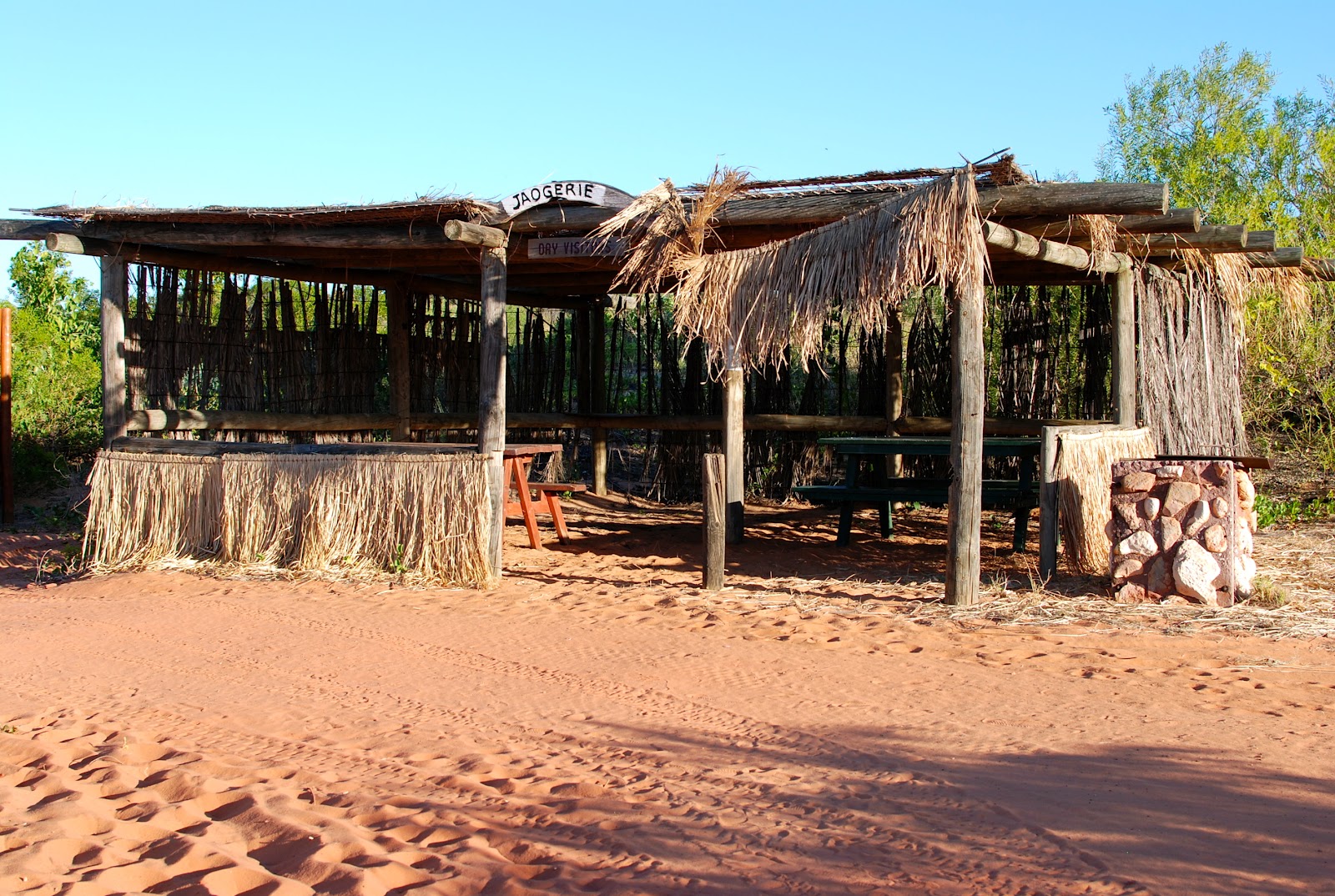
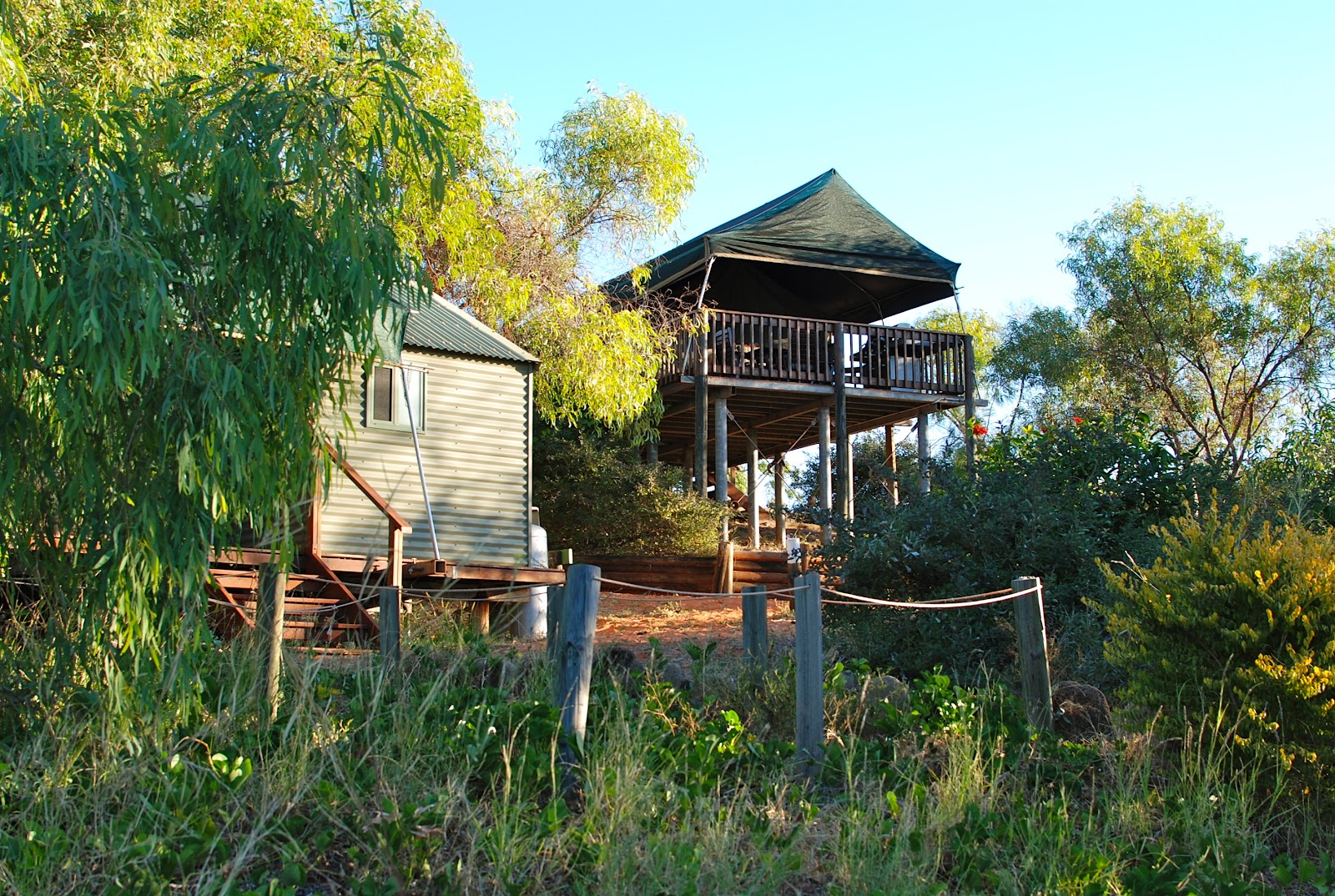

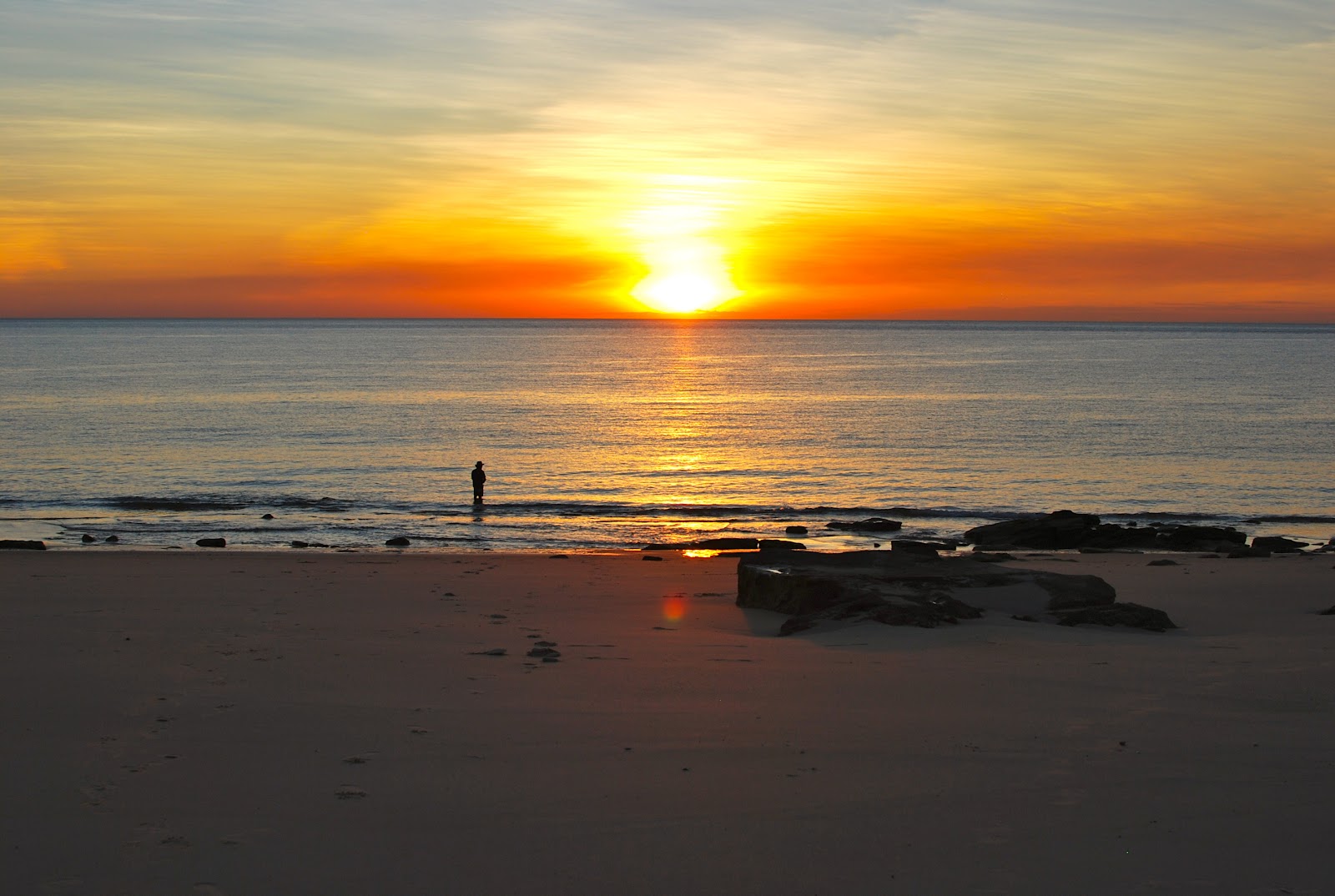
Unfortunately the wind picked up even more during our stay at Kooljaman and so we didn't get the boat in the water. Rob did some afternoon fishing off the beach but without much luck. However, our travelling companion, 10 year old Clayton brought in a nice sized GT much to the envy of his dad and Rob.


We visited a nearby Aboriginal community called Lombadina. Basil and Caroline Sibosado and their family run Lombadina and are working towards self sufficiency through community ventures which include a general store, artefact and craft shop, a bakery and tourism. We were told everybody here works, nobody takes government handouts. We wandered around the community and bought some crusty wood fired bread (still warm), visited the old church made of paper bark and mangrove and purchased some clapping sticks and hand died silk from the local arts centre.

The church at Lombadina, still in use.

Whilst up here on the Peninsula we've met many people who have been eager to discuss the proposed mining operations at James Price. There seems to be a fairly united front of opposition towards the proposal from most of the Aboriginal groups and other locals and concerned people. For our own part, on our travels through WA we have seen the impacts that mining can have both on the local area and on the towns and communities within them. The Dampier Peninsula is truly one of Australia's last remaining wildernesses and many of the communities up here are trying to make a go of what they have whilst still protecting this fragile environment. In our opinion, the area and the communities within it and nearby Broome could not withstand the impacts associated with off shore gas extraction and in particular the processing operation proposed on the land. it has been estimated (by the mining companies) that thousands of fly in - fly out workers would be required, that's similar to the numbers in areas like Karatha and Port Hedland. It would be a terrible shame to see the Peninsula and Broome end up like so many other mining affected areas in WA.

On our last night in Kooljaman we celebrated Rob's birthday. It was a low key affair, but we had our traditional crepes for breakfast, morning tea at the cafe (with a candle in a muffin), a fishing session and some afternoon drinks with some friends. Really, Rob could't have thought of a better way to celebrate his 34th birthday.

After a fabulous couple of weeks in an amazing part of Australia and with very little food left we packed up headed back to Broome. We're hoping to stock up and plan our attack on the Kimberley and the Gibb River Road.


Wednesday, 23 May 2012

Crayfish with Garlic Butter


We are fairly new at eating and enjoying seafood but we set out on this trip to get right into the guts (excuse the pun) of catching, eating, preparing and hopefully enjoying a much wider variety of seafood. Although our love of fish has been coming along well, we have been hesitant with most things in a shell. But as we travelled through the heart of australia's crayfish industry, the mid west coast, we were hoping to change our perspective of these crustaceans.

As you enter the towns of Cervantes and Jurien Bay and many other towns along the west coast, it seems like everyone is somehow involved in the crayfish industry (actual the western rock lobster, but generally just called crayfish). The crayfishing boats dominate the bays and the somewhat out of place modern houses could only have been funded by the ever prospering crayfish industry.

We were lucky enough to have a friend pop round for dinner with his arms full of his fresh catch from that day, two crayfish. He had caught several more free diving off a boat but based on the fact that we didn't have a big cray pot, he'd brought two of the smaller ones for us to sample. Not only did he bring dinner, but he also cooked it up for us. The result was delicious, we are now crayfish converts. This was his method for cooking up the crays.

Using a large sharp knife cut the crays in half through the their back, from nose to tail. Remove guts and muck and rinse. Place each half, shell side down in a shallow pot of boiling water (about 2 inches). Cook for several minutes until the flesh is almost cooked through. Then cover the open flesh side with a generous amount of butter and crushed garlic. Flip the crays onto a hot plate, BBQ or heavy frying pan with the flesh side down. Cook for a further couple of minutes. Serve one half per person, season with salt and pepper and 'eat him up'.

We didn't take a moment between serving and eating to take a photo, so here's one from the internet that looked pretty damn similar.
Photo: www.indianoceanlobsters.com.au

Monday, 14 May 2012

The PiIbara


We had planned to spend some time in Exmouth after our week in Cape Range National Park but the caravan parks wanted $57/night, which was way out of our budget, even with the enticement of a swimming pool and hot shower. So we left the peninsula and stayed at a basic but serviceable working station called Giralia. They had room for travellers in the shearers quarters, shady spots for camping, very rustic bathrooms and power for a few hours each night and morning via a generator. It may not have been glamorous but we were able to charge up the camper and finally (after a week) have a hot shower.


As we drove the few hundred kilometres from Giralia Station to Tom Price the landscape changed dramatically. The soil gradually shifted towards a bright burning red colour that has to be seen to believed and the Hamesley Ranges loomed up around us. It really doesn't feel like you drive up into the Hamesley Ranges more that you are still on the flat plains and the mountains have simply popped up around you.

After driving through burning red landscapes for hours, arriving at Tom Price was a complete surprise. Suddenly there was green everywhere. The sprinklers were going, there were luscious trees and every house had a gleaming manicured lawn. Tom Price is a mining town which was established in the 1960s for the purposes of servicing the Tom Price Mine. Dampier and the rail line that connects Tom Price to the coast at Dampier were also built for this purpose.  There's not much going on in Tom Price but it was a good place to stock up on supplies before heading into the National Parks.

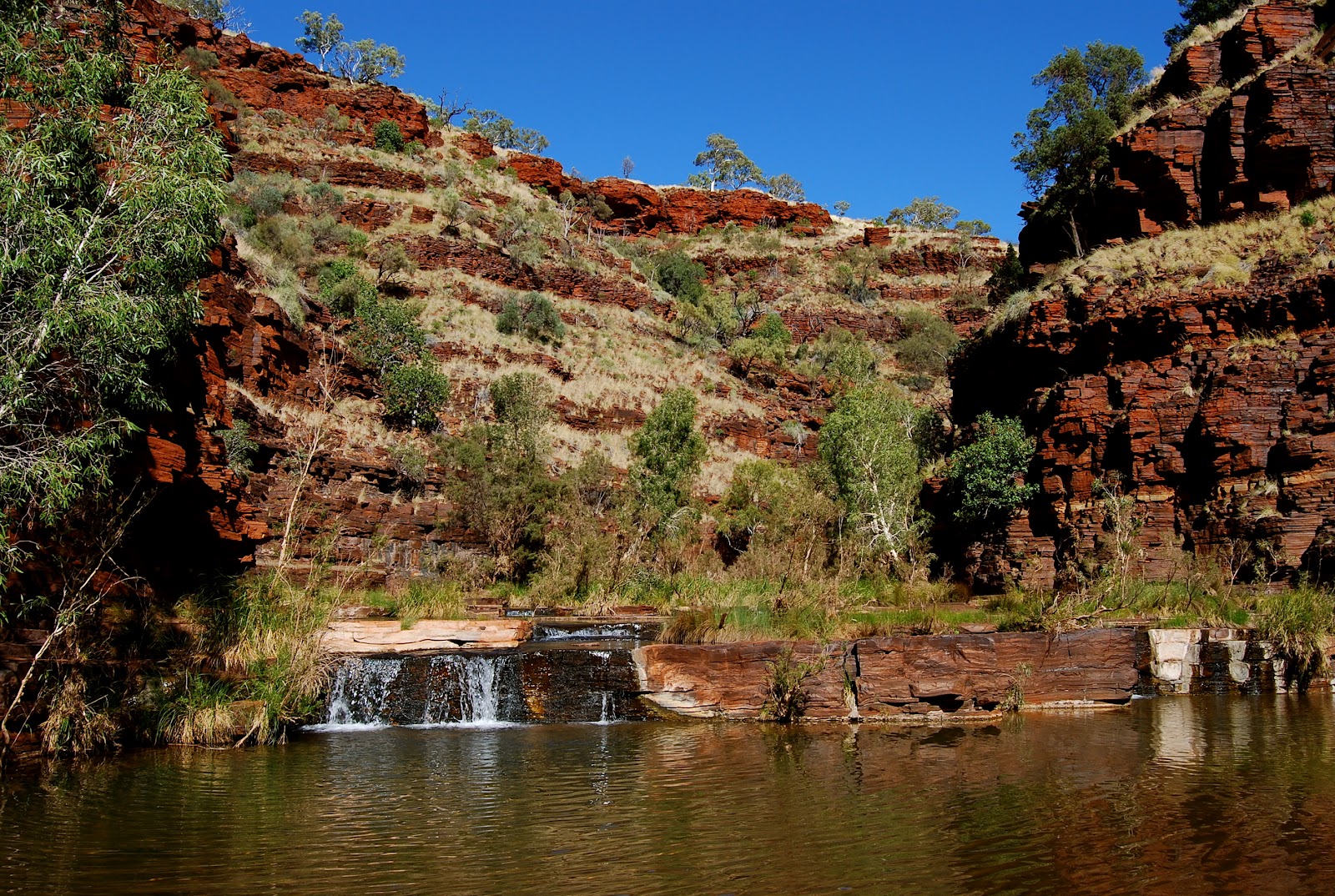
Karajini National Park is about 50km from Tom Price and it is described as the most spectacular national park in WA. And based on what we've seen so far, we would have to agree. As we drove into the park we wound our way through spectacular ranges and occasional grassy plains spotted with dark red termite mounds. In some places the ground was so rich with iron that it looked purple and sometimes even black. The ground at our campsite looked like it was littered with iron filings, which it was it's just that they were naturally occurring. Karajini is most well known for its deep gorges, cliff top outlooks and cool deep waterholes. However, we were not sure how much we were going to see with Jarvis. Most of the gorges require pretty tough walks and sometimes steep climbs. But we managed a couple of gorge walks using the backpack on and off. Jarvis even climbed down into one of the gorges by himself via steep steps and a ladder. He probably walked about 2km of the 4km walk that day, we were very proud of him. It was slow going walking with a three year old, but it was definitely worth the effort. The gorges were surreal; bright red and black rocks, yellow ochres,  green overhanging trees and crystal clear pools. In contrast to the heat up on the ridges it was cool in the bottom of the gorges but we still welcomed a refreshing swim in the waterholes and a splash in the waterfalls.


Due to our limited ability to go on big walks and explore, we decided to only spent two nights in Karajini. So after a couple of night enjoying the coolness of the inland nights we set off for Milstream Chichester National park which took us on another amazing drive through the Hamesley Ranges. On the plains on the other side of the range we spotted small bushes of Sturt Desert Pea. Both Rob and I remembered these flowers from our previous visits to the west and had been keen to spot them again. Up until now we hadn't seen any so we were pretty happy to come across them on the side of the road.


We camped in MIlstream Chichester at Crossing Pool. It is a glorious campsite with lots of shade and next to a deep cool waterhole. A couple of families we had met previously turned up later in the day so we spent a lovely night hanging out with them. The kids fished in the pool for catfish while the adults lazed around in the lovely shade (something most campsites are missing in WA).


Although most guide books and other travellers don't recommend visiting Karatha and Dampier (due to their industrial nature), we were keen to take a look for ourselves. Rob had spent a week in Dampier on his last visit and remembered it as a laid back place and was interested to see how much it had changed. As it turned out, not much. There was additional development in the area and the port operations and gas works had grown but town was pretty much the same; one pub, a small supermarket, a sailing club and a gorgeous view over the bay including the Dampier Archipelago. And most importantly we got to visit the Red Dog memorial (we also visited the library to read local anecdotes and articles about the famous Pilbara traveller). Karatha on the other hand, was pretty horrendous. It was just a big shopping centre and light industrial area to service the area.


The families from Crossing Pool turned up in Dampier so we all went together to see the "Staircase to the Moon". This is basically the reflection of the rising full moon on the tidal flats. The reason it is such a spectacle is because of the huge tides on the north west coast (up to 9m). The moon rises at low tide and due to the huge tides the tidal flats extend for hundreds of metres and the reflection of the moon creates a column of light across them. There are only a few places where this can be witnessed as the tidal flats need to be facing east, which obviously on the west coast is not the norm.


From Dampier to Broom it is about 850km with very little in between. We broke the drive up with a lunch stop at Port Hedland and a couple of nights and both Cape Keraudren and Barn Hill Station. Port Hedland is basically a heavily industrial port with very few facilities or even much that resembles a town centre, especially considering the town has a population of 15,000. So  as you can imagine we didn't hang around long in this town covered in red dust. Cape Keraudren was a great campsite (apart from the lack of shade). We camped on a ridge overlooking the rock pools and the ocean. We watched dolphins and turtles swim by as we ate our breakfast and we spent the day fishing and cooling off in the rock pools. Rob had a great time fishing and caught several fish including queen fish, trevally and even a shark. Barn Hill Station was one of our favourites stops on the west coast. There were big shady trees through the campsite and we were camped right on the coast. There were amazing sunsets, good fishing (Rob scored us a thread fin salmon for dinner) and beaches with no stingers or crocodiles (could be the last one for a while).

Cape Keraudren


Barn Hill Station


We are now in Broome preparing for our trip up the Dampier Peninsula (Cape Leveque). It has been a long drive from Perth, often without much to see or do for hundreds of kilometres. It's not a journey we would take on again lightly but we have enjoyed it immensely. Between the turquoise waters of Ningaloo, the red gorges of Karajini, the puzzling pinnacles and always tasty fish the drive from Perth to Broome is truly is a remarkable journey.

Thursday, 10 May 2012

Grilled Figs with Gorgonzola, Honey and Balsamic

Photo from http://sabrinaspassions.blogspot.com.au


I know this recipe is a little out of sync with our current location but I have a couple of recipes that I've picked up along the way which haven't made it onto the blog so you might see a couple of random recipes pop up in the coming weeks.

When we were in Margaret River figs seemed to be growing everywhere, there were even two huge fig trees at Big Valley which we often raided. We had fresh figs to snack on, grilled figs on buttermilk pancakes, fig and honey tarts and even had figs chopped up on our cereal. Considering the abundance of figs around the area it wasn't surprising to find almost every eatery featured figs on their menus in some form. I picked up this simple little recipe at the Vasse Virgin tasting room. It is very yummy. For those who don't like gorgonzola (mum and jess), you could use ricotta spiced with a bit of cinnamon and nutmeg instead.

8 Fresh Figs
6 ozs Gorgonzola
1/4 Cup of Honey
Balsamic Vinegar

Cut the figs in half lengthwise and put a tablespoon of gorgonzola on top of each half. Top this with a drizzle of honey and balsamic vinegar.

Put figs on a warm grill and cook until the cheese melts and the figs are heated through.

Serve immediately.

Sunday, 6 May 2012

Dukkah Crusted Emperor Fillets with Spiced Rice


Just in case you missed the last post, I thought I'd let you know I caught a 45cm Spangled Emperor while we were fishing on the Ningaloo Reef.... just in case you wanted to know.

Anyway, I cooked him up and he was delicious so I thought I'd share the recipe with you. I am the first to admit I'm new to this whole fish cooking caper so feel free to modify and improve this recipe. The ingredients for the spice rice were simply based on what we had left in the fridge, you could use anything really. And the inspiration for the dukkah crust came from a lovely little jar of dukkah that Mandy bought in Margaret River and had left with us (thanks Mandy).

Cook 1 cup of wild or basmati rice (enough for about 3 people) and set aside. In a pan heat some olive oil on a low heat, add one diced onion and two finely sliced cloves of garlic and fry gently until just starting to brown. Add 1 teaspoon of sumac, half a teaspoon of paprika and a teaspoon of whole cumin seeds. Season with salt and pepper. Fry until spices become fragrant. Add one large diced tomato and one bunch of chopped bokchoy (or spinach). Continue cooking for a couple of minutes or until bokchoy wilted and tomato cooked. Add cooked rice and stir through.

Press a decent amount of dukkah onto the side of the fillets with no skin and drizzle with a little oil. Heat one tablespoon of olive oil and one tablespoon of butter in a heavy based pan. Place the fillets in the pan skin side down and cook for about 3 to 5 minutes (depending on thickness of fillet). Turn and cook on the other side (dukkah crust down) for a couple more minutes.

Heap the spiced rice on your plates and place the fillets on top. 

We all loved it. Jarvis was silent for about 5 minutes whilst stuffing his face, when he finally took a breath, his only words were "this is yummy!". I guess we'll be making this again soon.

Wednesday, 2 May 2012

Ningaloo Reef


As we crossed the Tropic of Capricorn we gave a cheer. But one would be forgiven for being sceptical as to the actual presence of the 'tropics'. As we drove up the peninsula towards Exmouth and the Ningaloo Reef we were confronted with dry farmland dotted with red termite mounds and dust storms being swept up by the colossal winds ripping through the area. Hardly the tropical paradise we had imagined. But we are learning more and more that nothing in Western Australia seems to be quite the way you might imagine.

We had planned on staying on a station for a week or so as our introductory week on the Ningaloo Reef. But both Waroora and Nigngaloo Station required campers to have their own chemical toilets. We tried to show them our very nifty shovel but they didn't seem to think it cut the mustard. Rob even offered to dig a nice deep hole to show off his hole digging skills, but alas, not good enough. So we decided to head straight for Cape Range National Park. It runs right along the shores of the Ningaloo Reef and is one of the most popular National Parks in WA. We were a bit worried about getting a campsite, as we had heard horror stories of line-ups at the gate at 5am. But we rolled in at midday and got a spot at Ned's Camp without any fuss. 

We were camped a couple of spots down from another young family and just as we finished setting up another travelling family, whom we had met before, slipped into the spot between us. Both families were travelling round Australia and had three kids each. It was kid central and we all loved it.


We were dubious at first about the national park. There's not much to see on the land, it is very arid, with almost no trees, dry river beds and the wind was still blowing a gale. But as we discovered, the real beauty of the Cape Range National Park is not what is on the land but what is below the ocean and on the beaches. The coral reef is, in some places, only a short swim out from the beach. It was pretty magical sitting in a calm bay watching the surf pound the reef just off shore.


We spent the next week fishing at dawn in the boat, swimming at the white sandy beaches,  snorkelling around the coral reefs and we finished each day off with a few beers under the trees with the other mums and dads while the kids rode their bikes or played with Jarvis' ever increasing store of Lego.


We went snorkelling at the famous Turquoise Bay, it was divine. A gentle current takes you over the coral and fish and then you hop out on the sand bar, run down the beach and do it all again.  But we probably enjoyed the early mornings out on the reef in the boat even more, when the water was so still we could see every fish and coral and no one else was around. Rob got his lure snagged on the reef one morning, but the water was so clear he could simply dive down and grab it. The reef was teeming with life; just from the boat we saw turtles, dolphins, sharks and even a dugong.


Although, the highlight of our time on Ningaloo Reef was definitely the fishing. We went out in the boat every day and had great fun spinning lures, trawling live bait, jigging for squid and throwing Jarvis' hand line over. Em caught her first big fish, a 45cm spangled emperor, maybe not huge by fisherman's standards but enough to be proud of and it was yummy too.


For a week that started off a little on the wrong foot (rejections from station stays and doubtful first impressions of the national park), it has turned out to be fantastic. We bid our new friends farewell with the hope that we bump into them again and got back on the road. This time we're heading inland for a few days to visit the Hamesley Ranges.